艺术家王略,现⽣活⼯作于台湾和上海两地。带有东⽅特质的宗教、神话元素是王略常⽤的创作题材,这离不开王略的家庭背景:⽗亲是古⺠居考察团的⼀员,⽽⺟亲是虔诚的藏传佛教徒。作为热爱街头⽂化的时尚艺术家,王略希望为传统⽂化注入更多新潮的⽣命⼒,并玩出更多新花样。

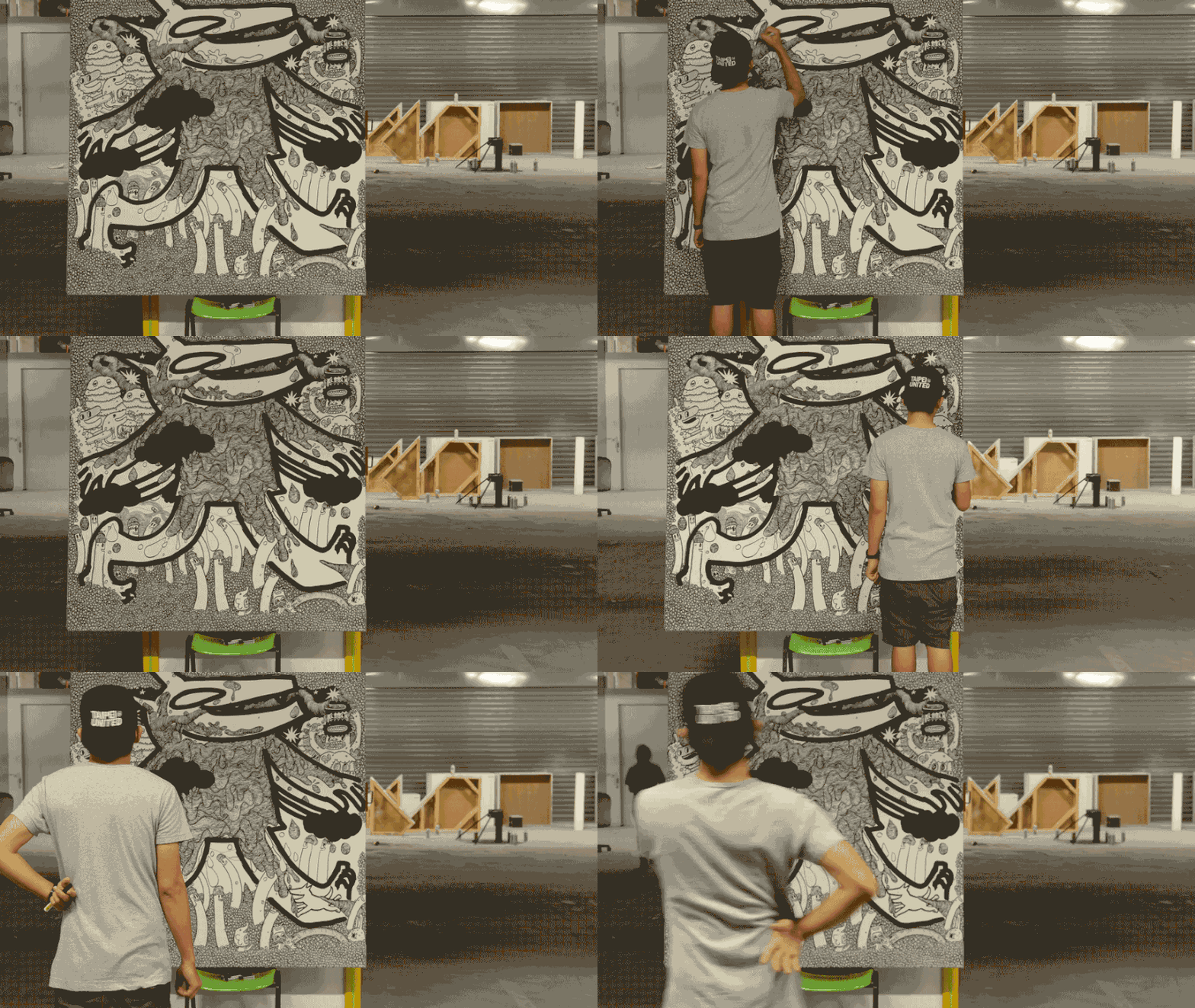
创作中的王略
W:王略
E: Eva

E:对于老玩意的新玩法,你是从什么时候开始进⾏这样的创作的?
W: 可能是⼤学结束之后吧,在美国读书学了点技术和艺术史的概念,⼼⾥就觉得不搞点⾃⼰⽂化
的东⻄就太没有意思了。我⼩时候是个非常爱看⽇本漫画的屁孩,所以对于扁平的插画很有感觉。后
来⻓⼤了⼀点,这些插画的图像渐渐转变成为装饰性的图腾,这种装饰性的图腾⻄⽅国家也有,但是
他们实在做得太具象了。反倒是东⽅的,抽象的图腾和符号看起来就太有意思了。

Sky is Falling,2015,丙烯,现为澳洲⽩兔美术馆馆藏
E:你是⼀个⽆神论者,也不相信⿁怪的存在,但你的作品⼤量地出现宗教和妖怪这两个你都不信的
题材,所以你画这些题材的驱动⼒是什么呢?
W: 对我来说这些题材更像是“⽂字”或是“符号”的存在。像是写⽂章⼀样,⿊⽩之间的符号,不需要
增加颜⾊。你可能有注意到,我的作品非常,⼏乎没有让⼈喘⽓的空间,每个⾓⾊和⻛景对我⽽⾔
都 是“字”, 都 只 是“符 号”。 有 的 特 别 可 爱 , 有 的 特 别 亲 切 , 好 像 在 哪 ⾥ 看 到 过 。 有 的 ⼜ 杂 乱 ⼜ 有 压
⼒,这些符号所组成的构图是我和观赏者们之间的⼩游戏。
E:所以你有解决⿁压床的⽅法吗?
W: ⿁压床说穿了就是做噩梦,半夜想醒醒不来和想动动不了。这些我经历过⼀阵⼦了以后(因为
传说我被下符了),我的解法就是,继!续!睡!

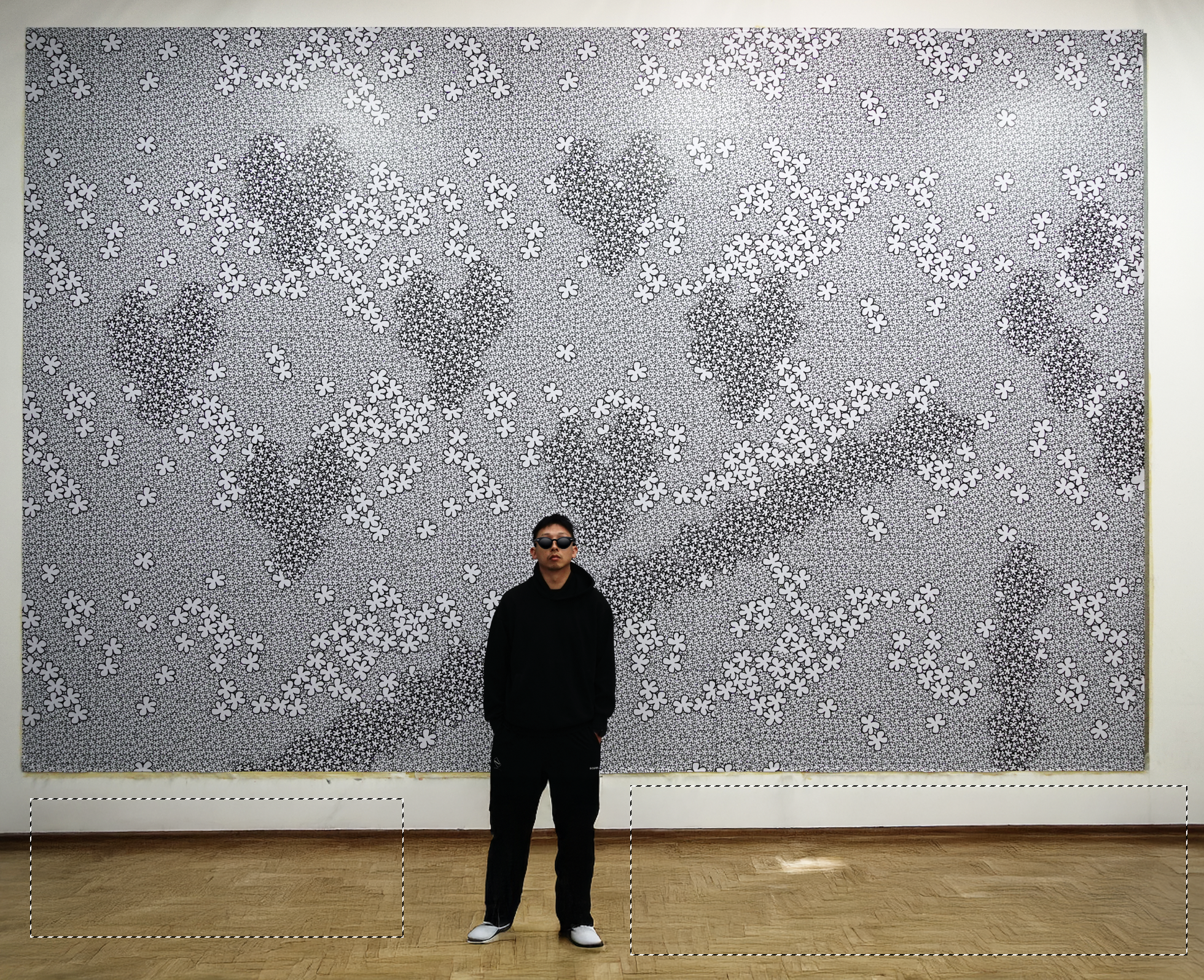
⽣老病死,丙烯,150x300cm,2014

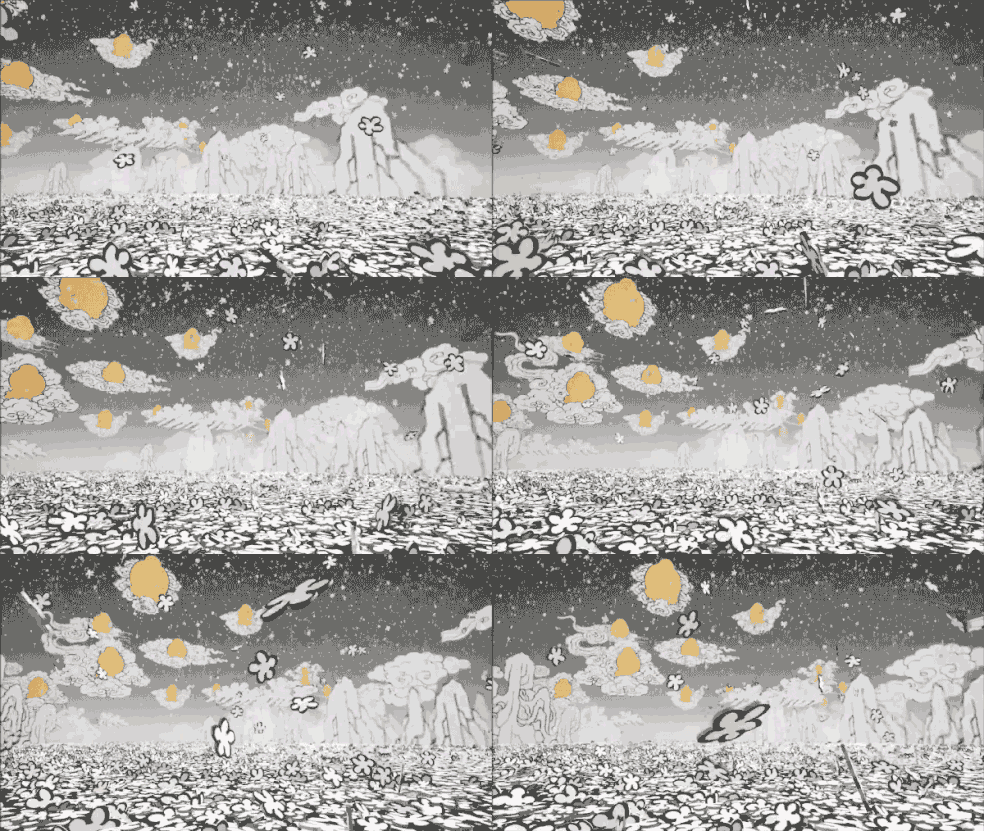
不周⼭,2017,VR绘画媒体装置,Unity in samsung S7
E:充复符号的空间,让我想起了⽇本艺术家草间弥⽣。你为什么会选择“花朵”作为⾃⼰的创作
符号呢?
W: 我认为在当代艺术之中,每个作者都在创造属于⾃⼰的符号,⼀个代表你⾃⼰的东⻄。它可能
是种⻛格,可能是技法,⼜可能只是颜⾊。我也想要创造属于我的符号:⼀朵⼩花⼉。亲切的但也是
脆弱的。⼀朵⼩花蛮可爱的,那⼀百万朵呢?究竟是个美梦还是个噩梦?上海的银杏树前⼏周开了
黄花,我看了特别感动,那种复性的魅⼒是很有⽣命活⼒的。
花朵的符号我称它们为“梦的细胞”。不知道是不是跟我被⿁压床过有关,我对梦境的东⻄蛮感兴趣
的,因为它毫⽆逻辑⽽且还没⼈弄懂它。我把梦境想象作为有机体,就像地球上的任何⽣命⼀样,是
有层层叠叠的细胞的,像花⼀样的细胞所组成的。⼩⼩团的,像个⼩⽩⽇梦,特别可爱。但⼀⼤坨⿊
簇簇的时候⼜像噩梦让你喘不过⽓来。

梦的细胞,2016,绘画媒体装置(梦的细胞,想象是作为梦境结构的功能基本单位)
E:当某个元素复且密集出现时,视觉上总有种会动的感觉。你在最近的作品中加入了VR,是为了
让这种感觉更立体和强烈吗?
W: 对的。VR是个新的载体。这项技术现在已经变便宜了。再加上计算机的运算能⼒的提升,未来
有很多有意思的作品可能在VR上发⽣。艺术既是可以反映现实世界的⽅式,也是逃离现实的调剂品。
但同时,新的问题也会产⽣。除了保存问题之外,有互动功能的VR作品究竟⼜和电玩产业有何区别?
你肯定在⼀些展览中看过粗糙品质的新媒体影片被称作“作品”。还是说新媒体艺术充其量只是⼩团队
的⾃慰呢?

流,2017,绘画媒体装置
E: 你⾃⼰作为⼀个也使⽤新媒体创作的艺术家,对于新媒体艺术这类近年⼤火的艺术类别有什么看
法呢?
W: 我的看法… 就会发光的比较屌啊
E: 会发光的比较屌,那不会发光的是比较逊吗?
W: 不会发光的被会发光的照着,也是会有有趣的影⼦啦….新媒体在互联⽹时代能发挥的题材实在
太庞⼤了,更别提互联⽹上都渐渐地形成了⾃⼰的⽂化(如弹幕)。我认为新媒体艺术是个待挖掘的
⾦矿,有好多有趣的题材在等待被创作。
E: 你⽬前的艺术表达⽅式与之前的⽅式,相同的是什么?不同的是什么呢?
W: 我觉得⼈总是在陌⽣中找寻熟,我也不例外,艺术对我⽽⾔也⼀样。刚到上海,有些街⾓真
的好像台北,如此的熟⼜如此的陌⽣,每个离乡⼈在城市中都是如此。艺术的表达⽅式也像是这
样。从我的艺术创作开始以来,我就在说⼀样的事情,⼀样的世界观,我打算⼀直说下去,不过呈现
的⽅法换了。2016年的时候我⽤“梦的细胞”的纸片包覆了整个展览空间,顿时,立体成了平⾯,把所
有⼈的眼睛都骗了。那次的作品特别有趣,贴纸片整整贴了三万片。

王略与《梦的细胞》
The Solution to Ghost Oppression Is to Keep Sleeping
Interviewer: Welcome, Lve Wang, to this fascinating discussion. Your recent exploration of ‘ghost oppression’—or sleep paralysis—has intrigued many. Can you start by explaining what drew you to this phenomenon, and how it ties into your work as an artist?
Wang: Thank you for having me. My interest in ghost oppression, or what’s scientifically termed sleep paralysis, stems from its deep roots in Chinese folklore and its universal psychological resonance. Growing up, I heard countless stories of ‘gui ya chuang’—the eerie sensation of being pinned down in a dream, unable to move, often accompanied by shadowy figures. It’s both terrifying and mystifying, a liminal space between wakefulness and sleep that feels like a portal to the subconscious. As an artist, I see it as a rich metaphor for memory, fear, and liberation—perfect for exploring in my ongoing project, “Dream Cells.”
Interviewer: That’s intriguing. Your project, ‘Dream Cells,’ is well-known for its layered floral symbols. How does sleep paralysis connect to this work, particularly in terms of its themes of life cycles and cultural memory?
Wang: Absolutely. “Dream Cells” is my attempt to capture the cyclical nature of life and the sedimentation of cultural memory, with each layer of floral symbols representing a fragment of time, like petals falling and accumulating. Sleep paralysis, or ghost oppression, fits seamlessly into this framework. It’s a moment where the mind cycles through fear and surrender, mirroring the way memories layer over time—sometimes heavy, sometimes fleeting. In Chinese culture, ghost oppression is often linked to ancestral spirits or unresolved emotions, which resonates with the healing and introspective essence of “Dream Cells.” I see each episode as a dream cell itself, a snapshot of the subconscious that I translate into visual layers, inviting viewers to find peace in the process.
Interviewer: That’s a beautiful connection. You mentioned the solution is to ‘keep sleeping.’ Can you elaborate on what that means, both practically and artistically?
Wang: Practically, sleep paralysis occurs during the transition between REM sleep and wakefulness, when the body remains temporarily paralyzed to prevent acting out dreams. The sensation of being ‘oppressed’—whether by a ghost or a psychological weight—can be overwhelming, but research and personal experience suggest that relaxing and allowing the episode to pass naturally, essentially ‘keeping sleeping,’ often resolves it. Artistically, this advice becomes a metaphor for surrender and acceptance in the face of life’s pressures. In “Dream Cells,” I depict this surrender through the gentle stacking of floral symbols, suggesting that healing emerges from embracing the weight of memory rather than resisting it. It’s about finding stillness amid chaos, much like drifting back into sleep during a ghost oppression episode.
Interviewer: That’s a profound perspective. How has this concept influenced your latest creations, especially in engaging with younger audiences in China?
Wang: Young audiences in China are incredibly drawn to narratives that blend tradition with modernity, especially those offering emotional resonance. Ghost oppression, as a cultural phenomenon, taps into a shared heritage—stories passed down through generations—while sleep paralysis as a scientific reality speaks to their lived experiences of stress and anxiety. In my recent works, I’ve incorporated subtle references to ghost oppression, like shadowy outlines within the floral layers of “Dream Cells,” symbolizing the tension between fear and tranquility. I share these ideas on platforms like WeChat and Xiaohongshu, where the younger generation engages with art through storytelling and visuals. This dialogue has helped me connect “Dream Cells” to their quest for healing and cultural identity.
Interviewer: Your work seems to bridge science, culture, and art seamlessly. What challenges have you faced in translating such a personal and complex concept into visual form?
Wang: The biggest challenge is balancing the scientific precision of sleep paralysis with the poetic ambiguity of art. Ghost oppression is both a tangible neurological event and a deeply subjective experience, steeped in cultural myth. In “Dream Cells,” I’ve had to distill this duality into something visually accessible yet layered with meaning. For instance, I use monochromatic gradients in some layers to evoke the shadowy, oppressive feeling of sleep paralysis, contrasted with vibrant floral hues to signify healing and awakening. It’s a delicate dance, but feedback from exhibitions and my WeChat audience—over 2,000 followers—shows that viewers connect with this tension, finding their own stories within the work.
Interviewer: That’s remarkable. Looking ahead, how do you plan to evolve ‘Dream Cells’ in light of these insights?
Wang: Moving forward, I want to deepen the dialogue between sleep paralysis and cultural memory, perhaps by incorporating interactive elements in future installations—allowing viewers to ‘sleep’ through a virtual ghost oppression experience, emerging into a space filled with “Dream Cells” layers. I’m also planning to collaborate with neuroscientists and cultural historians to explore the intersection of science and tradition further. In 2025, I’m targeting the Chinese market, aiming to showcase this evolution at events like the West Bund Art & Design Fair, where I hope to engage a broader audience with the healing potential of my works.